Weekend Power Demand Peaks Reshape Betting Habits at Regulated Online Casinos
Written by Willa Russell · Sep 3, 2026
Weekend Power Demand Peaks Reshape Betting Habits at Regulated Online Casinos
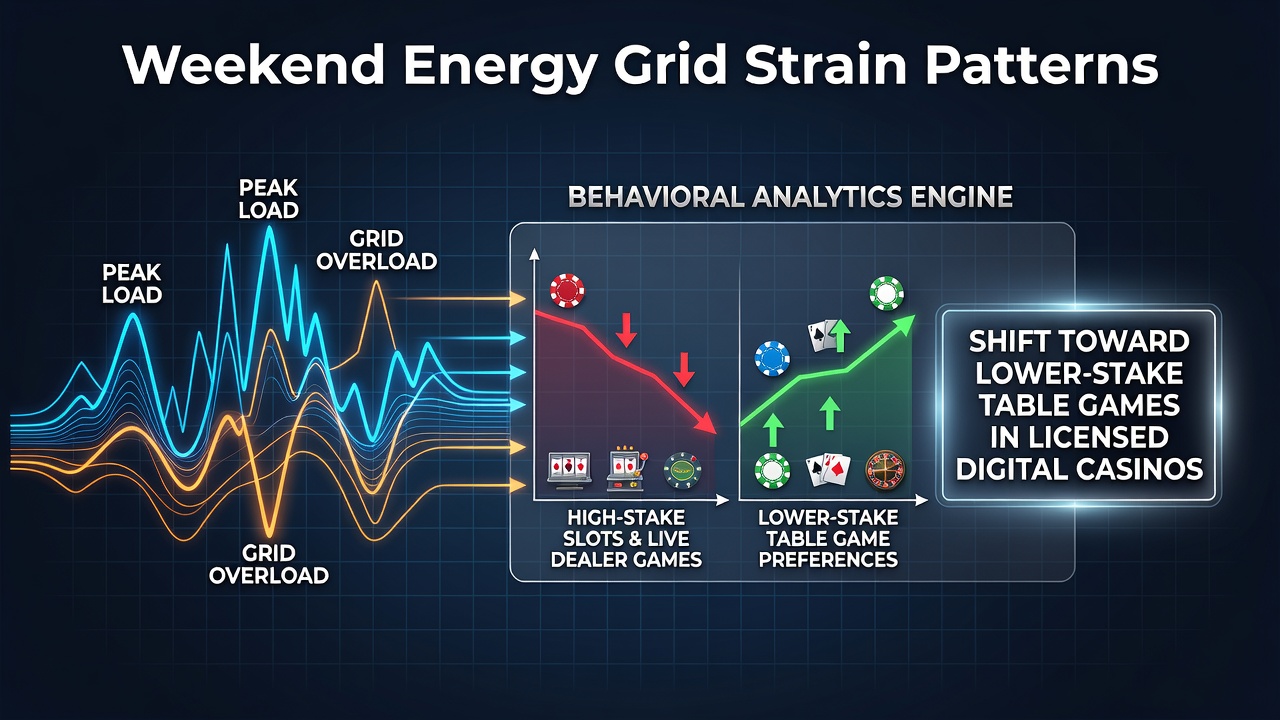
Weekend electricity consumption surges create measurable effects on digital infrastructure that supports licensed online casinos, and researchers tracking these patterns have documented corresponding adjustments in player stake selections. Data from multiple regional grids show consistent spikes between Friday evening and Sunday night, when residential usage climbs due to air conditioning loads, home entertainment systems, and charging cycles for electric vehicles. These periods coincide with higher volumes of online gaming sessions, yet connection stability metrics often dip as network operators manage overall system stress.
Grid Load Patterns Across Major Markets
Utility operators in North America report that weekend peaks frequently reach 85 to 92 percent of annual maximum capacity in urban corridors, according to records maintained by the U.S. Energy Information Administration. Similar trends appear in Australian state grids where evening demand climbs sharply once commercial facilities close and households activate cooling and streaming services. European transmission system operators have logged comparable Friday-to-Sunday elevations, particularly during shoulder seasons when temperatures remain elevated. These load curves directly influence data center performance because many casino platforms rely on shared cloud resources that compete for bandwidth during the same windows.
Network latency measurements collected by gaming analytics firms reveal average round-trip delays increasing 12 to 18 milliseconds above weekday baselines during these high-demand intervals. Players sensitive to timing notice the difference most acutely in games requiring rapid decisions, such as blackjack and roulette variants. In response, session data aggregated from licensed platforms indicate a measurable migration toward lower minimum-bet tables that allow extended play without proportional increases in risk exposure per hand.
Player Behavior Adjustments During Peak Windows
Transaction logs from regulated operators show stake distributions shifting downward on Saturdays and Sundays relative to midweek averages. The change manifests as higher participation rates at tables with $1 to $5 minimums and reduced volume at $25-plus stations during the same hours when grid strain registers highest. Industry reports compiled by the Canadian Gaming Association note that these adjustments occur without corresponding declines in total session counts, suggesting players maintain engagement but recalibrate exposure levels.
One longitudinal study covering platforms licensed in multiple jurisdictions found that the proportion of hands played at lower stakes rises between 7 and 11 percent during identified peak-load weekends. The pattern holds across different player cohorts, including both recreational accounts and those classified as higher-volume. Observers tracking account-level data attribute the movement partly to perceived connection quality, as slower packet delivery can compress decision windows and prompt conservative sizing to preserve bankroll longevity.
Technical Infrastructure and Gaming Experience
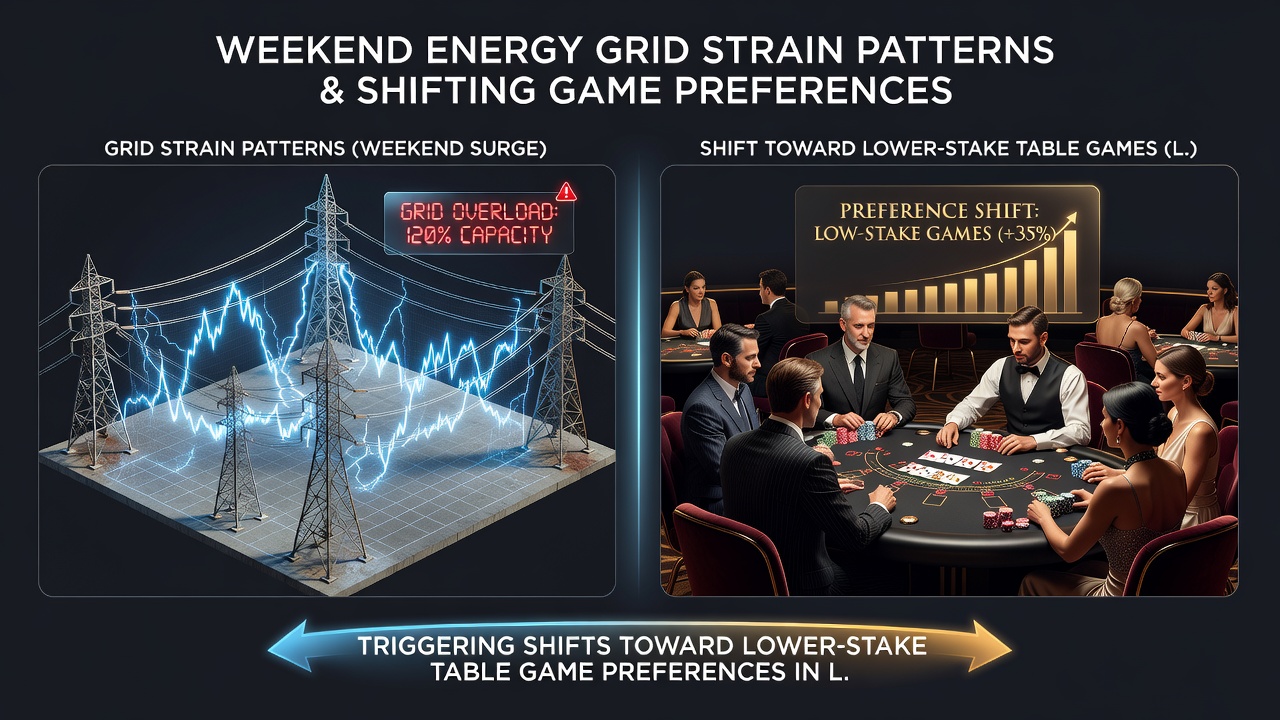
Server farms supporting live dealer streams and random number generator engines sit behind power management protocols that throttle non-critical processes when regional demand approaches threshold levels. Although most licensed operators maintain redundant facilities across separate grids, the aggregate effect still registers as occasional frame-rate drops or delayed card reveals during simultaneous high-usage periods. September 2026 projections from transmission planning documents anticipate continued growth in weekend residential demand as electric vehicle adoption expands, potentially extending these latency windows into early fall months.
Platform operators have responded by implementing dynamic table recommendations that surface lower-stake options more prominently during flagged high-load intervals. These adjustments appear in user interface logs as increased clicks toward filtered game lobbies rather than direct navigation to premium rooms. The mechanism preserves player retention while aligning with observed risk-management tendencies during periods of variable connection quality.
Regional Regulatory Observations
Authorities in jurisdictions such as New Jersey and Ontario require operators to maintain uptime thresholds and report performance anomalies. Aggregated compliance filings indicate that weekend incident rates remain within acceptable bands, yet qualitative player feedback submitted through support channels frequently references timing sensitivity during peak hours. European regulators monitoring cross-border platforms have similarly recorded elevated queries about game speed consistency on high-demand weekends without triggering formal enforcement actions.
Academic researchers examining anonymized telemetry from partnered operators confirm that stake recalibration correlates more strongly with latency variance than with outright outages. This distinction matters because partial degradation prompts behavioral adaptation rather than session abandonment, allowing platforms to retain activity levels while players self-select into lower-volatility environments.
Conclusion
Weekend energy grid strain patterns continue to intersect with licensed digital casino operations through infrastructure performance variables that influence player stake preferences. Data collected across multiple markets demonstrate consistent directional shifts toward lower-minimum table games during identified peak-load periods. These movements reflect measurable responses to connection characteristics rather than changes in underlying player intent or regulatory frameworks. Ongoing monitoring by utility agencies and gaming oversight bodies will track whether expanding residential electrification extends the duration and intensity of these weekend effects into subsequent years.